
Concrete Slabs in Boston, MA
Solid Foundations for Every Structure
At Boston Concrete Works, we create strong, precision-engineered, high-quality concrete slabs that are the foundation of your construction project. Whether it is a residential garage floor or a large commercial space, our concrete slabs will give you the solid footing you need for your project in Boston’s harsh weather environment. A well-made concrete slab is much more than a flat surface; it is one of the key structural components that will support heavy weight, keep water out, and be able to stand up to the extreme seasonal changes of New England.
We take pride in using proper site preparation along with advanced concrete pour procedures to meet all industry standards for each of our slabs. By using high-strength concrete mix designs and strategically placed reinforcement such as rebar or wire mesh, we minimize the chances of cracks in the slab due to settling. No matter what size or type of structure you are building (a new shed, an industrial warehouse, or a house addition), our concrete slabs will provide a solid, level, and lasting base that will work seamlessly with the needs of your building and the specific soil conditions of Boston.
Get A Free Quote
What is a Concrete Slab?
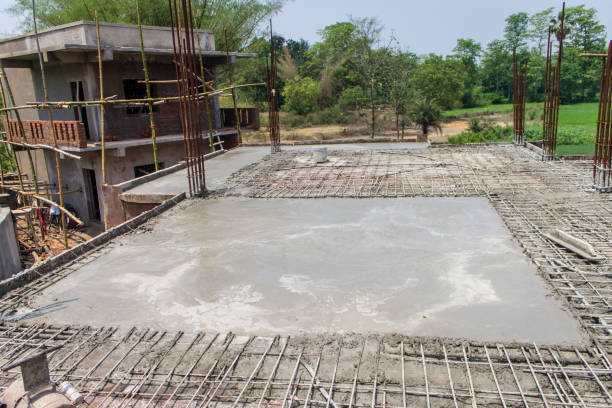
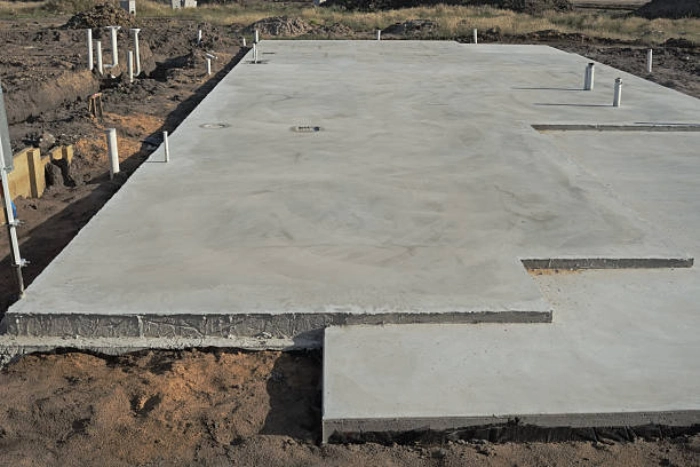
Concrete slabs are the structural elements of a building that act as the principal bearing surfaces. The slabs are made of poured concrete and typically have a thickness of between four and eight inches, depending upon whether the application will be residential/commercial or industrial. They serve to equally distribute the weight of the structure and all items placed on top of it (furniture, equipment, personnel, etc.) into the ground beneath them or to a support system. There are two general types of slabs: on-grade and suspended. On-grade slabs rest directly on the prepared soil or gravel base; whereas, suspended slabs are elevated and are supported by beams and columns.
Most slabs are also reinforced with either steel rebar or steel wire mesh for the sole reason of providing tensile strength to allow them to resist cracking from stress created by heavy usage and fluctuation of temperatures. Concrete slabs provide many additional functional benefits, beyond those of structural functionality alone, such as high thermal mass for improved energy efficiency, resistance to pests and moisture, and a smooth, even surface for a variety of flooring finishes. Therefore, the engineers of these slabs must develop precise designs to withstand the extreme freeze/thaw cycles common to this area of New England.
Why Choose Concrete Slabs?
- Stability: Allows for large, heavy objects to sit upon them without collapsing. The slab will provide a solid, unyielding base for anything ranging from a large garage with two-ton dump trucks sitting on top to a warehouse with heavy machinery, shelving, and storage racks.
- Longevity: Will withstand the freeze-thaw cycle of Boston’s weather and excessive weight. The slab has been designed to allow for the expansion and contraction of the concrete due to the extreme changes in temperature changes in Massachusetts. Air entrainment and reinforcing steel are utilized to create an extremely durable, long-lasting slab that will remain structurally sound and have an unblemished surface for many years after being subjected to numerous harsh winter conditions.
- Variety of Uses: Can be used for several different applications. For example, slabs can be used for home additions, shed bases, dumpster pads, and basement floors. Additionally, they can be finished in a variety of methods, such as a rough broom finish for added traction, a high-gloss polish for an interior look, etc.
- Maintenance: Does not require much maintenance. After the slab has fully cured and been sealed, there is very little that needs to be done to maintain it. Unlike wood or other composite materials, it does not rot, warp, or become infested with insects.
- Cost-Effectiveness: Typically less expensive than alternative flooring options. When compared to the cost of materials and labor associated with installing joists and plank flooring or complex masonry systems, a slab provides a cost-effective way to get a high-strength product. It also creates a long-lasting structure that will not need repair in the future.
- Energy Efficiency: Helps to regulate indoor temperatures when properly insulated. Concrete has high thermal mass, which means it can absorb and retain heat. In conjunction with having a conditioned space with the correct perimeter insulation, a slab can help keep the indoor temperature consistent and reduce the amount of time the heating/cooling systems are running during Boston’s most extreme climate months.
Our Concrete Slab Services
Residential Concrete Slabs
Our residential concrete slab service is focused on creating a quality poured foundation for all aspects of your home improvement project, including:
- Garage Flooring: These slabs are designed to carry the weight of vehicles as well as the effects of oil and chemical stains.
- Home Additions: This service provides you with a solid, level base that can be built into your new addition without any compromise to your existing structure.
- Shed Bases: These are durable, waterproof slabs designed to protect the items stored in your shed or other outdoor storage units.
- Basement Floors: These slabs will create a dry, smooth surface, which is ideal for finishing or utility use in your basement.
- Outdoor Living Spaces: Our durable slabs are great for use in heavy-duty kitchen slabs, fire pit slabs, and patios.
Commercial Concrete Slabs
Commercial slabs are designed for use in high-traffic and/or high-load environments to meet the requirements of your busy Boston area business, including:
- Warehouse Flooring: Level, flat slabs that can withstand forklift traffic and heavy shelving.
- Retail Space Flooring: Clean, professional-grade slabs that are ready to accept any architectural floor finish.
- Industrial Facility Flooring: High-strength pours that can withstand vibration from heavy machinery and other industrial uses.
- Office Building Flooring: Structural slabs that provide good sound-dampening and thermal mass capabilities.
- Parking Lot Slabs: Exterior slabs that are designed to drain water and withstand years of vehicle wear and tear.
Custom Slabs (Specialized)
When you need a custom solution for your project due to either technical or aesthetic requirements, we can design and build specialized concrete slabs for you:
- Radiant Heat Flooring: Slabs specifically designed to support hydronic or electric heating systems for ultimate comfort.
- Polished Concrete Floors: High-performance slabs that can be polished to a mirror-like finish, providing a modern and low-maintenance look.
- Heavy Machinery Slabs: Extra-thick, reinforced pours that help to reduce vibration from heavy machinery for industrial use.
- Decorative Outdoor Slabs: Provide both structural integrity and decorative finishes to create an attractive and functional exterior look for your property.
Our Concrete Slab Installation Process
Our concrete slab installation process is engineered to provide maximum stability and longevity, tailored specifically for the environmental demands of the Boston area:
- Site Evaluation: This step includes the assessment of site conditions, including soil conditions, existing drainage, and structural requirements, which will determine the excavation depth (typically 8–12 inches), the base material necessary, and the type and amount of reinforcement to be included as part of the slab to ensure that it meets the local load requirements.
- Excavation: This step will include digging to the required depth, which includes the thickness of the base material, the thickness of the moisture barrier, and the thickness of the concrete slab.
- Base Material Preparation: In preparation for the installation of the base material, we will be installing a compacted gravel base to provide a stable and well-draining base for the slab to sit on. Due to the large variety of soils found in New England, the installation of this aggregate base is crucial to prevent settlement and to help manage water issues caused by heavy rain or melting snow.
- Installation of Moisture Barriers: As an additional layer of protection against moisture entering the slab, we will be installing a vapor barrier to help keep the ground moisture out of the slab. The installation of a vapor barrier is especially important when working with heated spaces, basement spaces, or other spaces where you intend to complete finished flooring to help prevent the growth of mold and the effects of dampness.
- Setting Forms: To ensure that the slab has the correct dimensions, levels, and clean edges, we set the forms precisely using double checks on all of our measurements and grading to ensure that the slab fits seamlessly with the rest of your project.
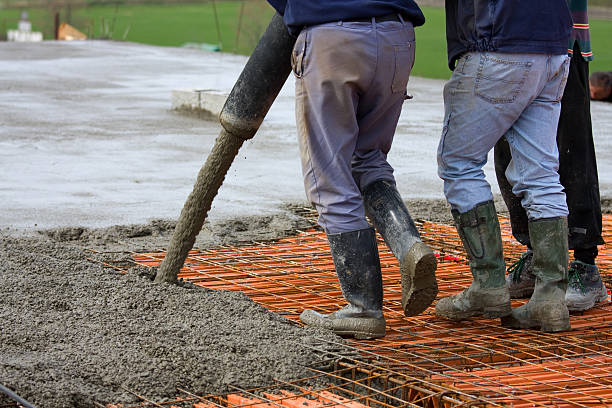
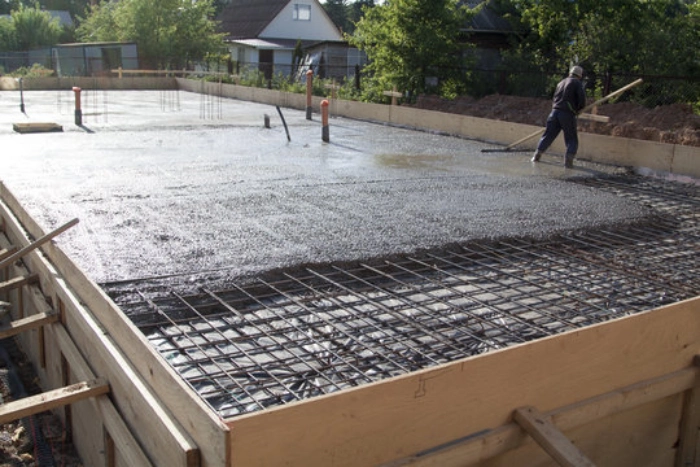
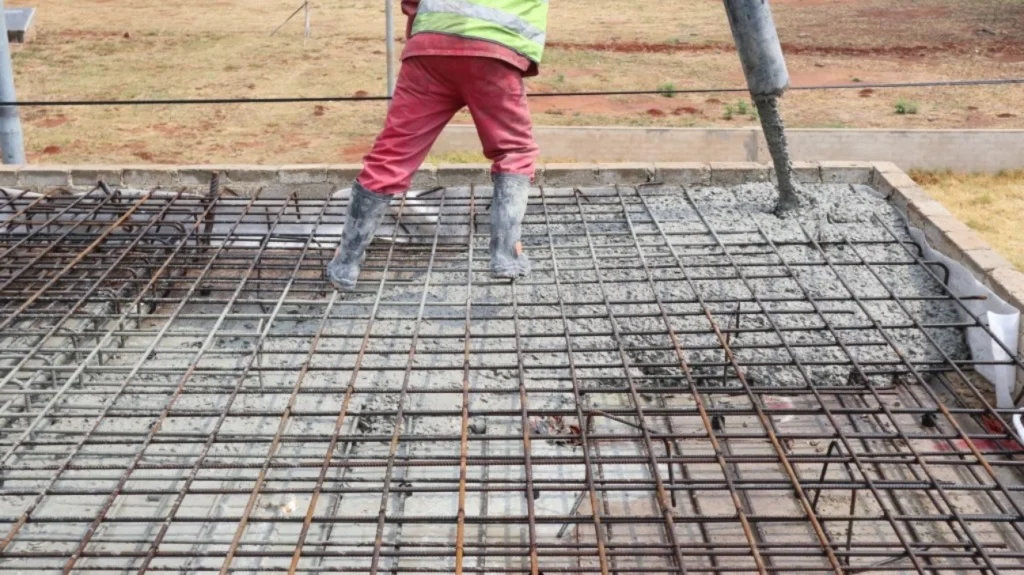
- Placement of Reinforcement: Using either rebar or wire mesh reinforcement to help prevent cracking of the slab, we place the reinforcement in the lower third of the slab to provide the greatest possible tensile strength for the slab’s ability to carry heavy loads.
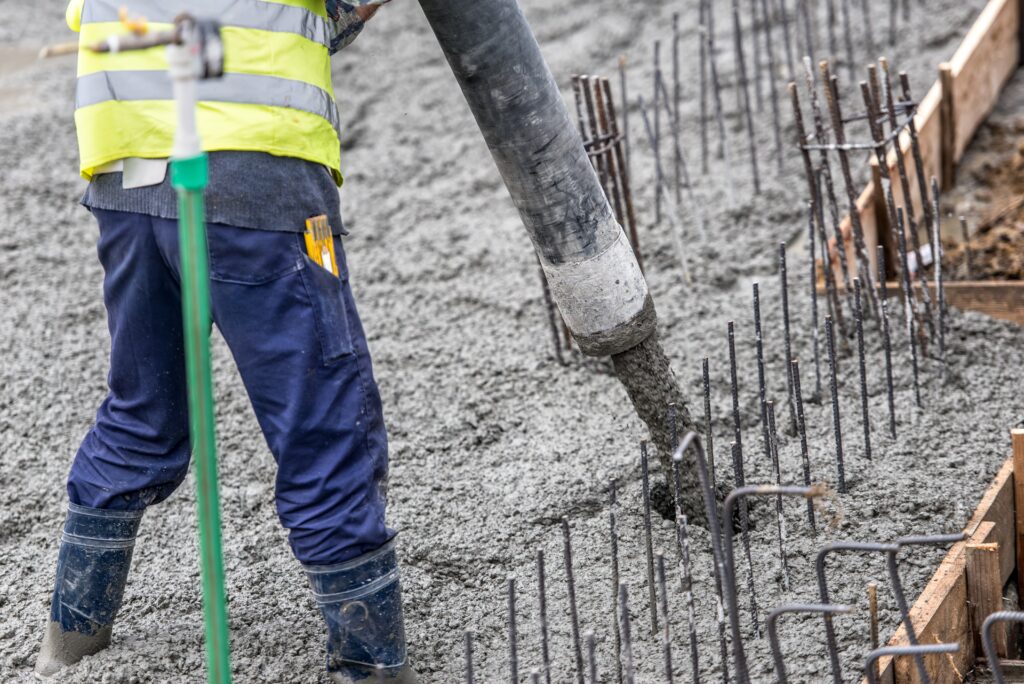
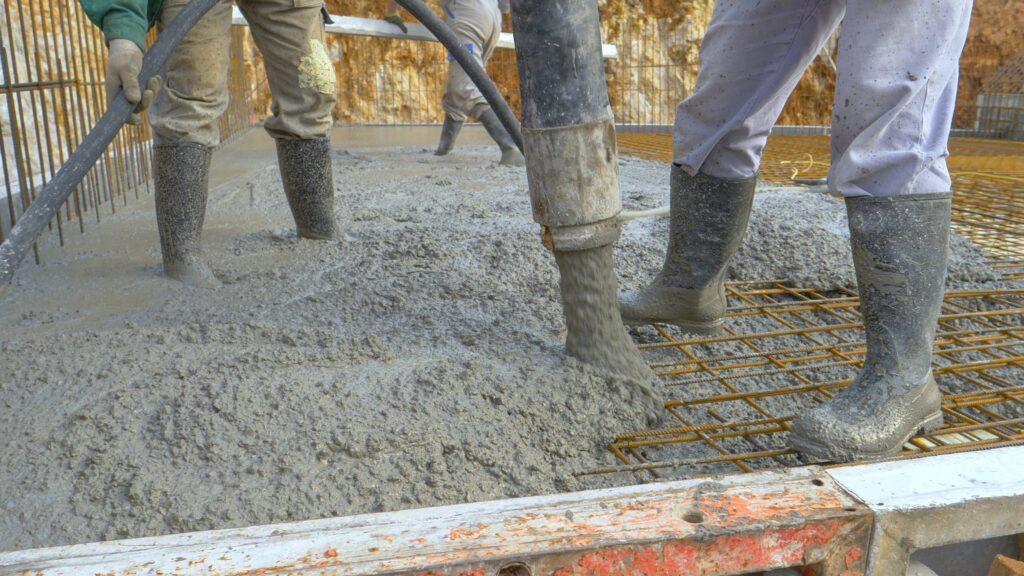
- Pouring Concrete: For the concrete mix, we will select a strength rating that is suitable for the intended application and, in many cases, include air entrainment to help increase the freeze-thaw resistance of the slab. We take care to properly place and consolidate the concrete to avoid voids and to ensure that the density remains consistent throughout the entire pour.
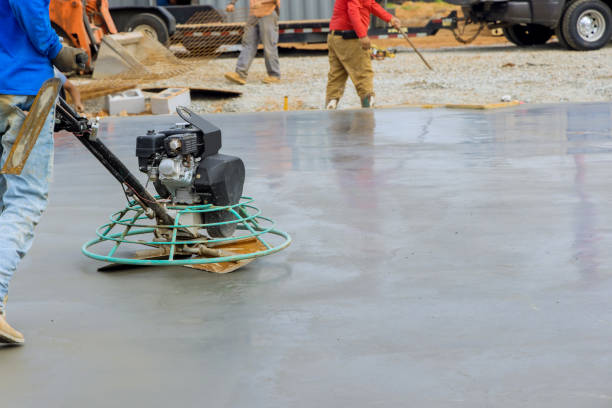
- Finishing: After the concrete has been poured and cured sufficiently, we will finish the surface to create the desired finish for the intended application, such as a smooth troweled finish for an interior floor or a textured finish for an exterior area requiring traction.
- Creating Control Joints: To help manage shrinkage cracking, we strategically cut control joints in the slab to ensure that if any natural movement occurs, the crack will occur in a controlled location rather than at random points in the slab.
- Curing: To ensure that the concrete reaches its full design strength, proper curing is critical. During the curing process, we protect the slab to maintain optimal curing conditions and provide clear guidelines regarding how long the slab should be allowed to cure prior to being loaded or allowing further construction to begin.
Types of Concrete Slabs We Offer
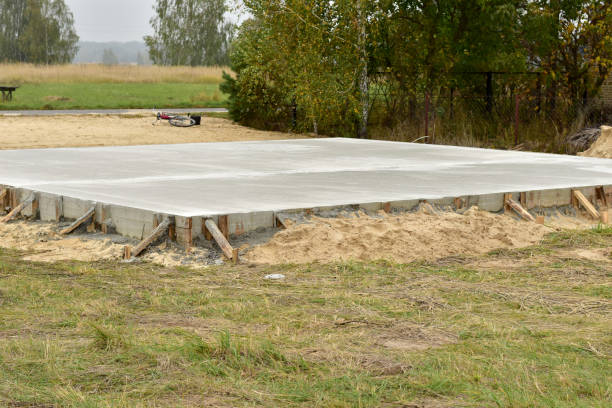
- Standard Slabs-on-Grade: Suitable for garages, sheds, and other simple structures. The slabs are poured directly onto the prepared base of compacted aggregate (gravel) or crushed stone, making it a cost-effective, time-efficient option for most residential applications.
- Floating Slabs: Designed to be placed over stable soil areas, these slabs “float” on top of the ground, requiring shallow footings. As such, less excavation is needed when using floating slabs, which makes them suitable for detached garages and utility buildings.
- Monolithic Slabs: The Footing and slab are created together as one, in a single pour. This creates a strong foundation for smaller to medium-sized structures, allowing for faster build times due to combining two pours into one.
- Post-Tensioned Slabs: High-strength post-tensioned steel cables are used to create greater tensile strength and reduce cracking in slabs. Post-tensioned slabs are ideal for larger commercial projects or areas of expansive soils.
- Insulated Concrete Slabs: Rigid foam insulation is integrated into the slab to prevent heat from being lost into the earth, creating an energy-efficient floor system. Insulated concrete slabs are a great option for heated floors and conditioned spaces throughout the cold winter months in Boston.
Why Choose Boston Concrete Works for Your Concrete Slab?
- Understanding Local Conditions: We understand what soil types exist in the Boston area, how deep the frost goes, and what the building code requirements are. Our experts have extensive knowledge of the minimum depth necessary to excavate under the frost line in Massachusetts, so your slab does not “heave” or “shift” when it gets cold outside.
- Using Quality Materials: We use a type of cement mix that is specifically formulated to perform well in the harsh weather conditions found throughout New England. We utilize a high-performance mix that includes special additives that will help resist extreme temperature variations as well as the corrosive effects of de-icing salt used by snow removal crews during the winter months.
- Designing Slabs to Prevent Cracking & Settling: Our slabs are engineered to never crack and/or settle. By accurately determining the load-bearing capacity of the slab and utilizing the appropriate ratio of reinforcement, we can develop a monolithic foundation that will be level and stable for the entire life cycle of the structure.
- Using Advanced Techniques: We employ the most up-to-date technologies in the field of concrete to produce the best possible results. From using laser-leveling equipment to produce perfect flat surfaces to using modern vapor barriers and curing compounds, we use the most current techniques in the industry to provide an excellent finished product.
- Our Experienced Crew: Our crew has many years of experience in performing all aspects of concrete work in the Boston area. We have successfully performed hundreds of pours throughout the Greater Boston area and therefore possess the “hands-on” expertise to deal with the logistical and environmental challenges associated with working on a local job site.
- Meeting Timelines: We adhere to all project timelines so you can complete your construction projects on time. We work closely with all other contractors and homeowners to ensure our portion of the project is completed quickly and efficiently so the next phase of your building project may begin without delay.
Maintaining Your Concrete Slab in Boston
- Seal Interior Slabs Regularly: Interior slabs should be sealed every two to three years to shield against both moisture and stains. Sealing with a top-of-the-line sealer will create an impervious layer that protects against water, oil, and other household chemicals from entering through the porous surface of the slab. For garage and basement floor applications, sealing is essential to avoid the possibility of efflorescence or mold development due to excessive moisture.
- Keep Outdoor Slabs Clean: Outdoor slabs must be kept clean and clear of debris to avoid staining. Sweeping away leaves, dirt, and other organic materials regularly will prevent tannin and acid buildup, which may cause the color of the concrete to fade. The use of periodic pressure washing or mild detergents will help keep the slabs looking like new by preventing moss or mildew growth.
- Repair Cracks Immediately: Repairing cracks immediately after they occur is very important to prevent water from entering the slab, particularly in areas such as Boston’s freeze-thaw environment. Hairline fractures are capable of allowing large amounts of water to penetrate to great depths within the concrete. When the water freezes and expands, it will also increase the size of the crack and, over time, may result in severe structural damage or heaving. Repairing the slab with a flexible concrete filler at the first sign of damage is key to maintaining long-term stability.
- Use Plastic Snow Shovels: Plastic snow shovels should be used when clearing snow from exterior slabs to protect against potential damage. The metal blade of a traditional shovel and ice scraper may scratch or gouge the surface of the concrete, especially if the slab is decorative or has a specialized finish. While not as effective at removing snow as their metal counterparts, plastic snow shovels are a much safer alternative for protecting against surface damage to the slab.
- Avoid De-icer Chemicals: De-icer chemicals should never be applied to exterior slabs; sand or kitty litter are preferred options for traction on icy surfaces. De-icer chemicals (such as rock salt) can react chemically with the concrete, causing degradation to the material and accelerating the spalling (flaking off) of the concrete surface. Sand or kitty litter provides similar traction on ice but does so without any corrosive properties to the slab, providing a safe solution for years to come.
Ready to Start Your Concrete Slab Project?
If you are planning on building a new garage, adding to your home, or have an ongoing business that requires a strong, long-lasting floor, then Boston Concrete Works can build a solid base of a concrete slab for you. We will work with you to produce a custom-engineered concrete slab that will meet your requirements and last in Boston’s harsh climate.
Please call us today for a no-cost consultation and quote. Find out why we have become Boston’s leading expert in producing precision-engineered concrete slabs.
Phone: (617) 958-2158
Email: [email protected]
Boston Concrete Works – Laying the Groundwork for Your Success, One Slab at a Time.
FAQs About Concrete Slabs in Boston, MA
The thickness of a concrete slab depends on its intended use:
- Residential garage floors: Typically 4 inches
- Driveways: Usually 5-6 inches
- Commercial or industrial floors: Often 6-8 inches or more We also consider factors like soil conditions and expected loads to determine the optimal thickness for your project.
Yes, we can pour concrete slabs year-round in Boston, but winter installations require special techniques:
- Using heated enclosures to maintain proper curing temperatures
- Adding accelerants to the concrete mix
- Careful planning around weather forecasts We take extra precautions to ensure your slab cures properly, even in cold weather.
We employ several strategies to minimize cracking:
- Proper sub-grade preparation and compaction
- Using the right concrete mix for local conditions
- Installing control joints at strategic locations
- Ensuring proper curing techniques
- Applying sealants to protect against moisture infiltration These methods help ensure your slab remains stable despite Boston’s temperature fluctuations and freeze-thaw cycles.