
Menu
Cost & ROI of Decorative Concrete Upgrades for Boston Homes
Decorative Concrete Boston
Boston home owners are realizing that decorative concrete is a good way to increase their home’s property value. In addition to increasing the overall style of a home (both in the cities and in the suburbs of Newton), it also increases the value of a home. Upgrading your concrete can be a great way to get a high return on investment and improve an area of your home from a standard space to an architectural feature. A professional assessment of decorative concrete upgrades will provide you with information on cost, return on investment, and how the upgraded decorative concrete will affect the future resale value of your property based on today’s market conditions in your neighborhood. The assessment will also help determine what decorative concrete upgrade strategy would be best for your Greater Boston Property.
Stamped Concrete Investment Analysis
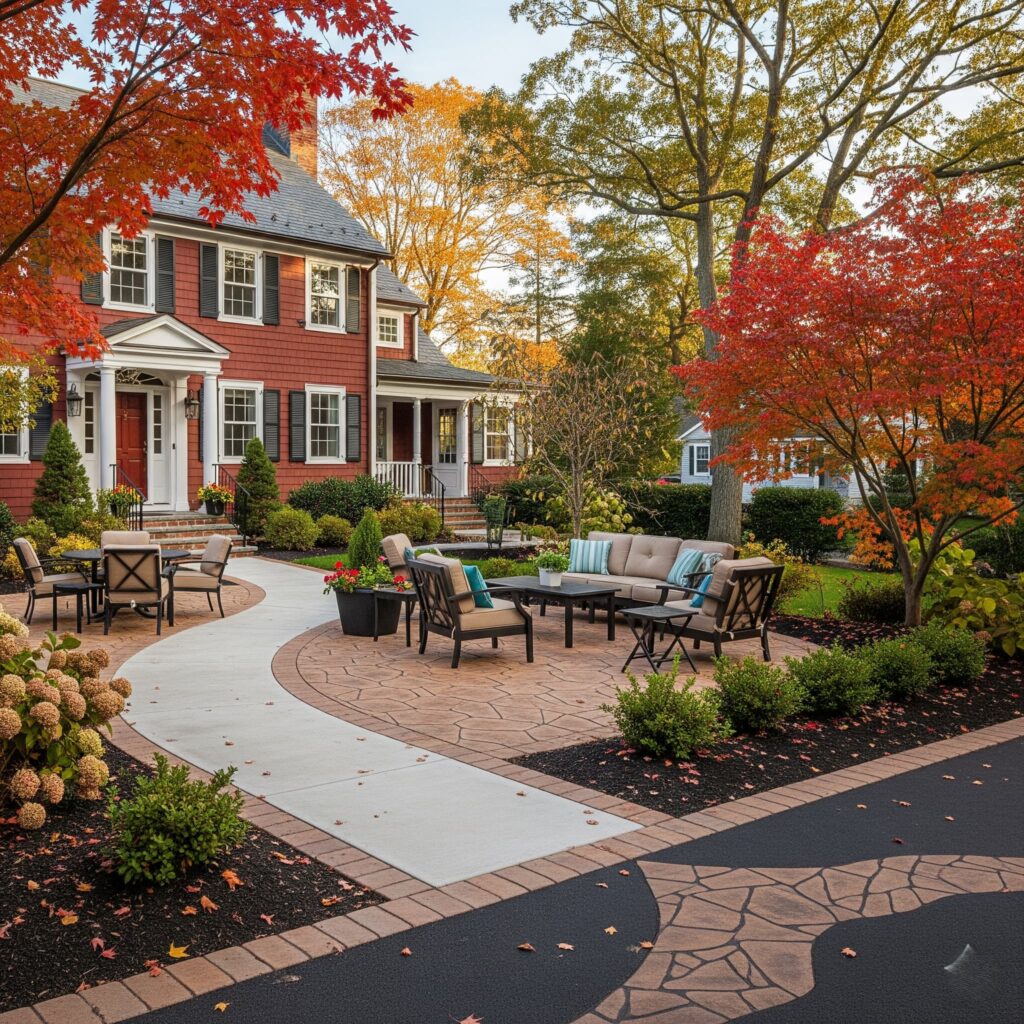
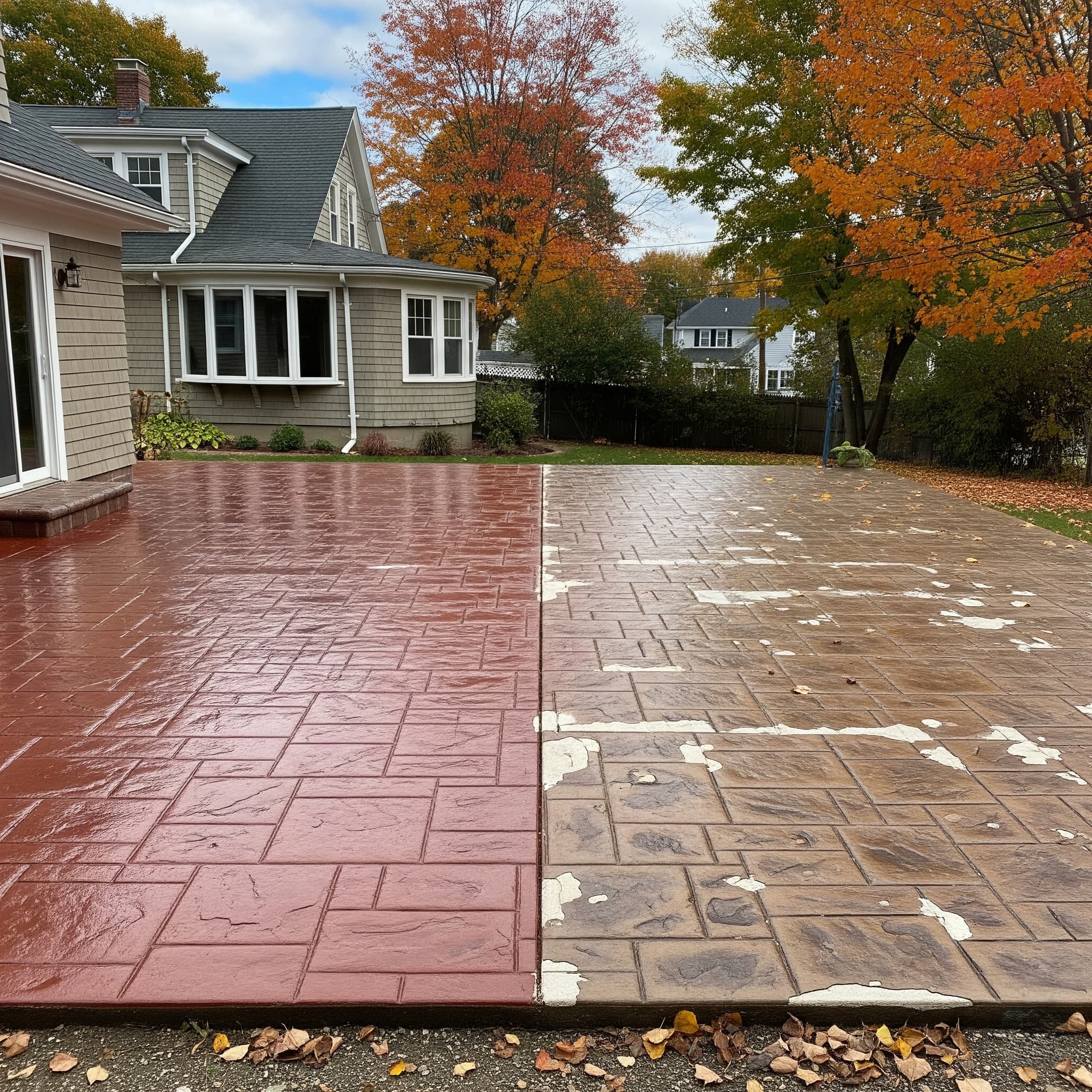
Stamped concrete is the most popular decorative concrete option for homeowners in the Boston area; however, the cost to install varies by type (basic vs. complex) and size of project, ranging from $16 to $25 per square foot. The costs of the different types of stamped concrete are as follows: Basic stamped concrete will cost approximately $18 per square foot, while more complex designs with multiple colors and borders may cost anywhere from $22 to $25 per square foot. With this in mind, a standard 400-square-foot patio would cost anywhere from $7,200 to $12,000 for a quality installation.
The return on investment (ROI) of installing a stamped concrete patio typically ranges from 80 to 100 percent; the added value of a quality installation adds approximately $6,000 to $8,000 in property value. High-end stamped concrete projects can add 15 percent to a home’s value in competitive neighborhoods in the county. As many as 63 percent of homebuyers prefer concrete patios over traditional wood-decking options.
Calculating Driveway Upgrade ROI
Decorative concrete driveways have one of the largest returns on investment of any outdoor project. Basic installations of decorative concrete driveways recover 50 to 80 percent of the original cost of the installation. Professional stamped driveway installations cost anywhere from $10 to $25 per square foot, depending on how complex the design is and how much detailing has been included. Thus, upgrading a standard two-car driveway will require an investment of $4,000 to $12,000 for a complete decorative treatment.
According to the market analysis, decorative driveways immediately add $3,000 to $10,000 in property value while greatly enhancing curb appeal. Homes located in upscale neighborhoods, such as Beacon Hill or Cambridge, receive a higher price for their premium decorative concrete installations. In addition to adding value to your home, decorative driveways also attract more buyers who are looking for move-in-ready homes with upgraded exterior features. They also save you time by getting your home sold faster.
Economics of Polished Concrete Flooring
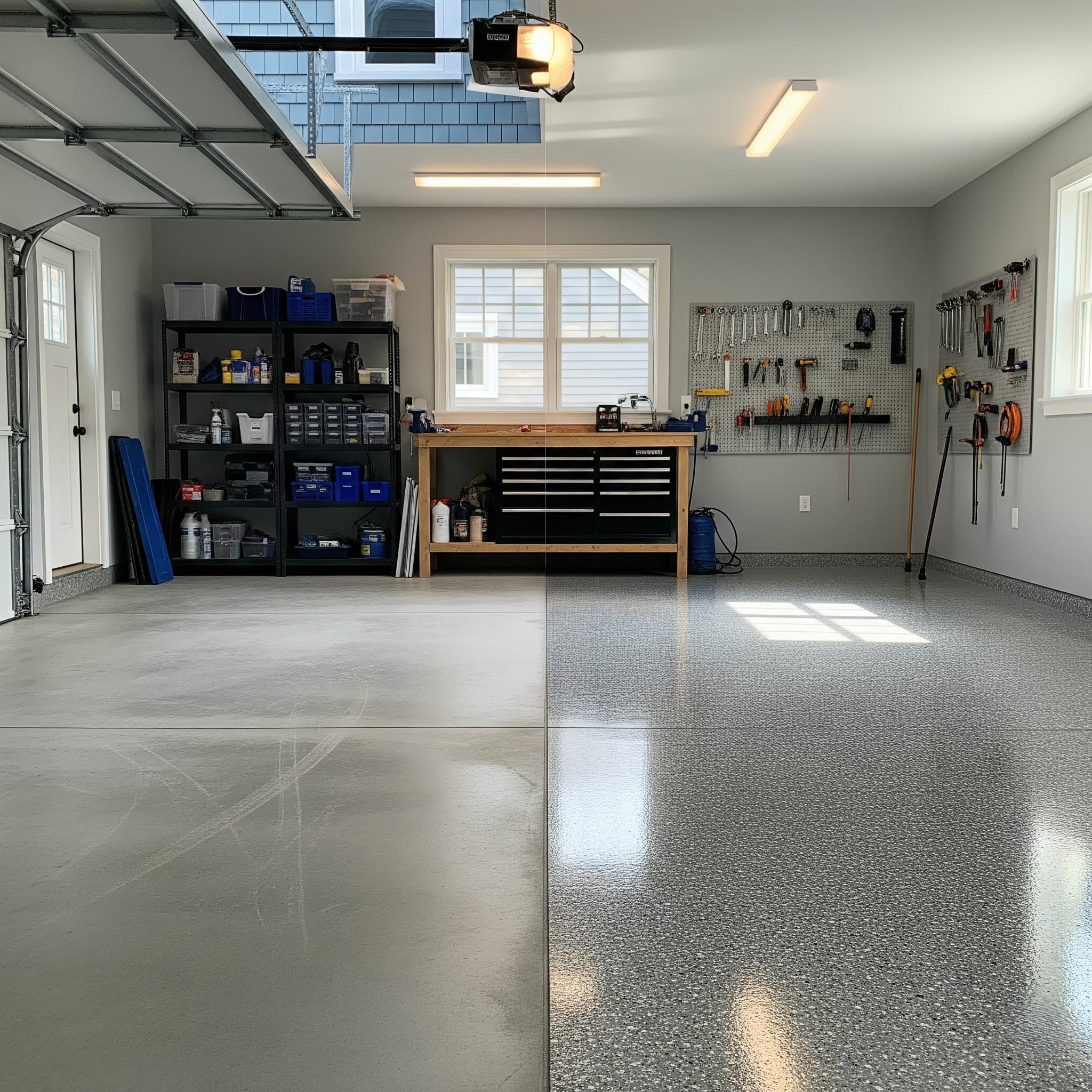
Polished concrete flooring has a wide range of costs depending on whether the installation is commercial or residential, and whether decorative elements are included. Residential polished concrete flooring costs anywhere from $4 to $10 per square foot for a basic installation, which makes it very competitive with traditional flooring options. Commercial polished concrete flooring costs anywhere from $3 to $8 per square foot, while decorative elements can increase the cost to $5 to $15 per square foot. Upgrading a 1,000-square-foot basement or garage to a polished concrete floor will cost anywhere from $4,000 to $10,000 for a professional polish.
Polished concrete flooring offers long-term value through lower maintenance costs and longer durability than traditional flooring materials. The cost of installation is much lower than hardwood, stone, and premium tile options while offering superior performance characteristics. Additionally, polished concrete meets the qualifications for LEED credits and environmental tax incentives, which can be used to offset the initial installation costs.
Energy Efficiency and Operation Cost Reduction
Polished concrete flooring helps reduce energy costs by using its enhanced light and thermal-mass properties to maintain average indoor temperatures. Light-colored polished surfaces increase illumination efficiency by 25 to 30 percent, thereby reducing artificial lighting requirements during Boston’s long winter months. Thermal-mass properties also aid in balancing interior temperature fluctuations and thus reduce heating and cooling costs.
In terms of maintenance cost reductions, the cost of maintaining a polished concrete floor compounds over time since it simply needs to be regularly damp-mopped, whereas refinishing, replacing, or professionally cleaning other flooring options becomes increasingly costly. Overall, the total lifecycle costs associated with polished concrete flooring are typically 40 to 60 percent less than those associated with carpet, hardwood, or tile flooring options over 20 years.
Returns on Investments in Concrete Staining and Overlays
Concrete staining is another affordable and effective way to create a high-return-on-investment decorative concrete project. Compared to other decorative options available today, stained concrete has relatively low initial costs, ranging from $2 to $8 per square foot for professional application. Acid stain is a basic form of concrete staining and costs anywhere from $3 to $5 per square foot, while water-based stains and more complex color schemes cost $6 to $8 per square foot. Stained concrete allows homeowners to transform existing concrete surfaces into a beautiful and durable decorative feature quickly and affordably.
Decorative overlays also provide a high return on investment, costing anywhere from $6 to $20 per square foot and allowing homeowners to create a stamp-like appearance on their worn or damaged concrete surfaces without the expense of completely replacing them. Decorative overlays provide homeowners with a budget-friendly option for creating a decorative feature in their home while extending the life of their existing concrete surfaces.
Position in the Market and Competitive Analysis
Boston’s competitive housing market places a premium on properties with unique features that differentiate them from standard properties. Decorative concrete installations give homes an edge over comparably priced homes, while also being a desirable option for homebuyers seeking low-maintenance and high-quality exterior features. The quality of the decorative concrete also implies that the homeowner has paid attention to details regarding the entire property.
Decorative concrete performs best in areas of the city where the median home price is greater than $500,000, primarily in affluent towns such as Wellesley, Brookline, and Arlington. High-end installations justify higher asking prices while attracting high-end buyers who appreciate quality craftsmanship and durability. Decorative concrete also complements the architecture prevalent in New England residential developments.
Timeliness and Market Conditions
There are certain times of the year and certain market conditions that are ideal for decorative concrete installations. Ideally, spring is a better time to perform decorative concrete installations because they can be enjoyed by the homeowner during the summer months, and positioning the property for sale in the fall, when buyers are actively seeking “move-in-ready” homes. Completing a project before severe weather events demonstrates that the homeowner takes pride in maintaining their property.
Currently, there is strong demand for quality home improvements that improve both the short-term enjoyment of the home and the long-term value of the home. As construction costs continue to rise, existing-home renovations appear to be a more attractive option for consumers compared to new construction. Decorative concrete projects offer “luxury” at a fraction of the cost of competing options.
Financing and Budget Options
Generally, decorative concrete projects qualify for home-improvement financing options, such as personal loans, home-equity lines-of-credit, and home-refinancing programs. The costs of decorative concrete projects generally range from $5,000 to $25,000 for extensive upgrades, making them financially accessible to most homeowners without necessitating a substantial debt restructuring. Additionally, the increased property value resulting from a decorative concrete project offsets some of the costs of obtaining a loan due to the increased equity in the home.
Decorative concrete projects can be installed in phases, allowing homeowners to fund their project over several years and experience the benefits of their decorative concrete project in stages. By first focusing on high-traffic, high-visibility areas, such as entranceways or patios, homeowners can experience immediate benefits while developing a plan for future enhancements. Decorative concrete installations typically last 20 to 30 years, providing homeowners with long-term benefits and value compared to other short-lived improvement options.
Value Proposition of Professional Installation
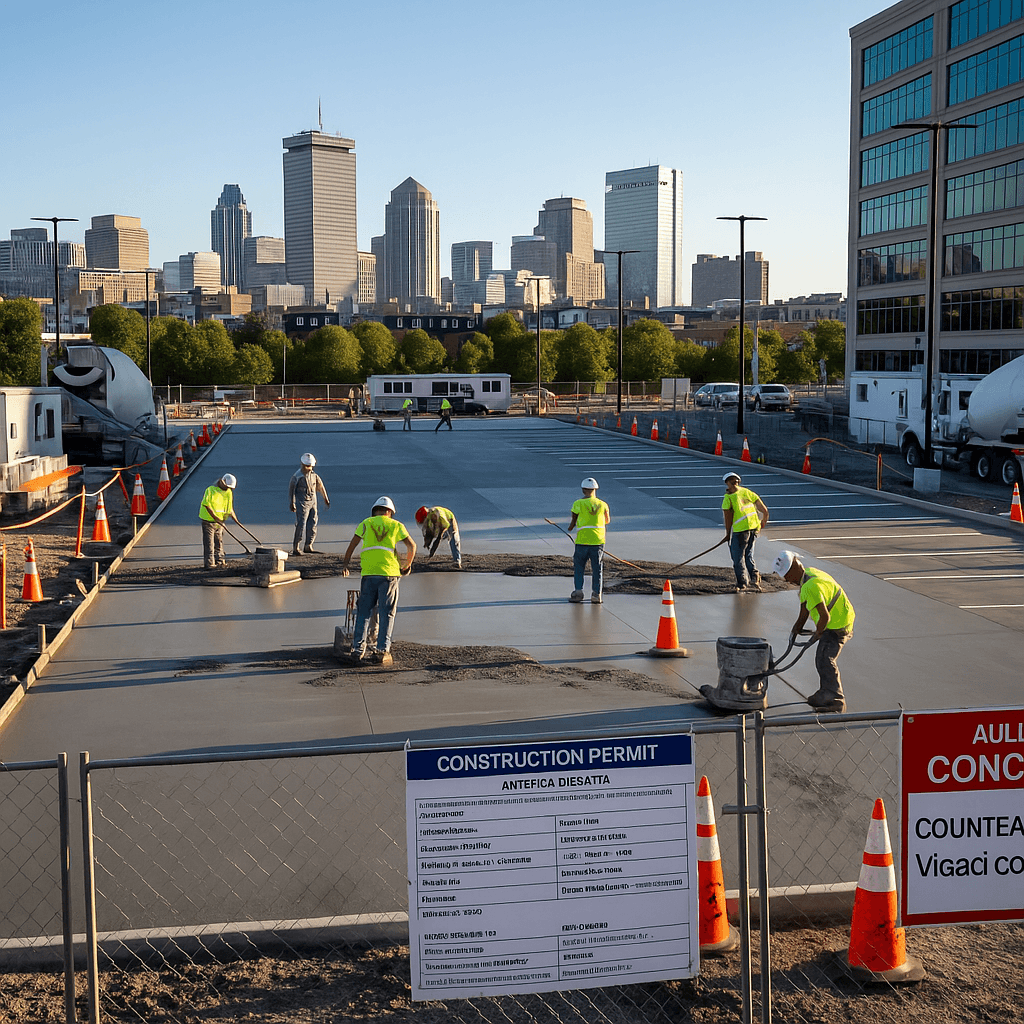
Professional installation is key to maximizing the return on investment of a decorative concrete project, ensuring that the best possible results are achieved and that the homeowner receives a professional-looking finish that enhances the perceived value of their home. Most homeowners are unable to replicate the level of quality and professionalism of a decorative concrete project that a licensed contractor achieves with their own hands. Contractors are familiar with local building codes, permitting requirements, and decorative concrete installation methods that address the extreme weather conditions found in Boston.
The quality of the installation will directly impact the long-term durability and ease of maintenance of the decorative concrete project, ultimately affecting the total cost of owning the home. A professional installer will properly prepare the surface for the decorative concrete, choose the right materials for the job, and apply the finishing techniques necessary to achieve a durable and attractive decorative concrete finish. Additionally, a contractor’s warranty protects the homeowner against premature failure of the decorative concrete, potentially damaging the homeowner’s property value.
Appreciation of Property Value and Long-Term Value Trends
Decorative concrete installations provide a long-term return on investment as properties age and maintenance costs become a factor for potential homebuyers. Decorative concrete does not lose its appearance and functionality over time, as do other decorative materials that need to be periodically replaced or refinished. Thus, the long-term benefits of decorative concrete accumulate through reduced maintenance costs and continued aesthetic appeal.
According to current trends, homebuyers are increasingly preferring low-maintenance, environmentally-friendly features in their homes that reduce operating costs. Decorative concrete fits within this trend as it is both visually appealing and durable, justifying premium pricing in competitive markets across Greater Boston.
Boston Concrete Works provides comprehensive decorative concrete solutions to maximize both the short-term and long-term return on investment for Greater Boston homeowners. Our experienced team understands local market conditions, architectural requirements, and quality standards that ensure maximum value creation through professional decorative concrete installations.
LATEST POSTS
Cost & ROI of Decorative Concrete Upgrades for Boston Homes
September 24, 2025
No Comments
Stamped Concrete Mistakes to Avoid in Wet/New England Climates
September 22, 2025
No Comments