
Menu
Stamped Concrete Mistakes to Avoid in Wet/New England Climates
Stamped Concrete Boston
The challenging climate of New England creates difficult installation situations for stamped concrete in and around the Greater Boston area. Weather-related errors have damaged or ruined many decorative concrete investments in historic Beacon Hill neighborhoods as well as suburban developments in Lexington. Understanding the most common potential problems will help prevent costly repairs or early replacement of your decorative concrete investment. Experienced professional contractors are aware of the climate-specific challenges involved with installing decorative concrete and use proven methods to install durable, attractive, and long-lasting stamped concrete surfaces that can withstand the demanding seasonal conditions of Massachusetts.
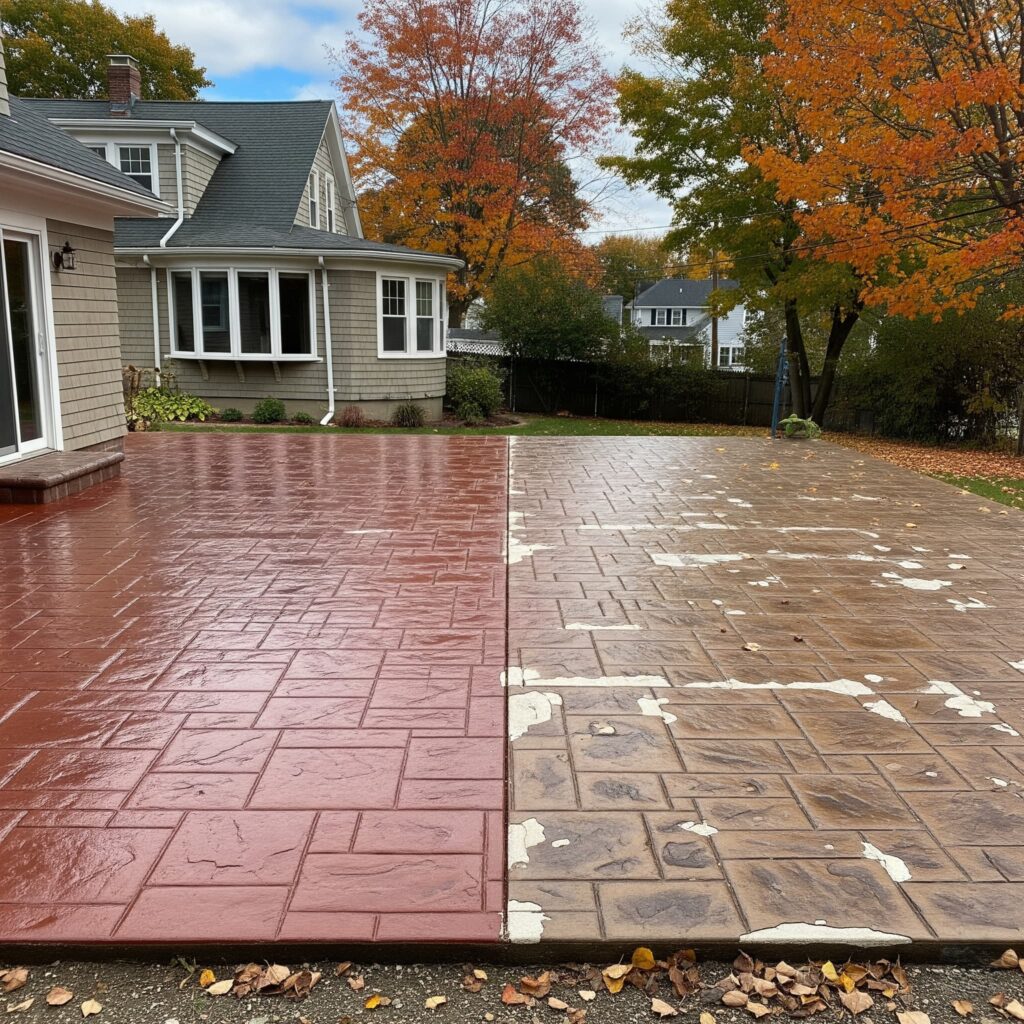
Weather Timing, and Installation Mistakes in Stamped Concrete
Rushing the installation of stamped concrete in adverse weather conditions is the most common and costliest error made in stamped concrete installations in New England. The unpredictable temperature fluctuations and strong wetness in the air, with the sudden weather changes, present an environment that negatively affects the quality of the concrete. Moreover, contractors that do not heed weather predictions will likely experience severe failures resulting in the destruction of the entire project and the need to replace it entirely.
Careful attention to local conditions is necessary to achieve the desired temperature requirements for the successful installation of stamped concrete. It is advisable to never pour concrete when the temperature falls below 50°F or exceeds 90°F during the first 24 hours after pouring. Further, nighttime temperatures falling below freezing result in a significant (up to 50%) reduction in the final strength of the concrete, thus producing a surface that is structurally weak and prone to failure.
Preparation Failures due to Freeze-Thaw Cycles
Massachusetts has approximately 60 to 80 annual freeze-thaw cycles; therefore, it is important to prepare concrete properly for long-term power. Air-entrained concrete with a 5 to 7 percent air content provides essential protection against expansion damage during the winter months. Contractors who omit this critical specification create surfaces that are susceptible to spalling, scaling, and structural failure.
Trapping Moisture Through Premature Sealing Before Curing Completion
Prematurely sealing the decorative surface before curing completion allows moisture to become trapped and creates adhesion problems throughout the decorative surface. Professional installations require a minimum of 28 days of curing time prior to applying the sealer, regardless of the pressure from homeowners to apply the sealer sooner. Also, sealing in cold weather, i.e., less than 50°F, precludes adequate curing of the sealer, which ultimately creates long-term maintenance nightmares.
Surface Preparation and Base Failures
The majority of long-term problems associated with stamped concrete installations in the Boston area are caused by subgrade-preparation failures. To avoid settlement issues, excavation must extend down to firm, undisturbed soil at a minimum of 12 inches below grade. After excavation, a dense-graded aggregate base must be properly compacted in 4-inch lifts to a minimum of 95 percent of the standard proctor density for stability.
Proper drainage is also critical in New England’s wet climate; poor water management contributes to base erosion and, ultimately, failure of the concrete. Proper design of the slope directs water away from structures and prevents pooling that would undermine the integrity of the concrete. Also, inadequate vapor barriers in below-grade installations permit moisture migration that results in adhesion problems and surface decay.
Geological Soil Conditions
The various soil conditions found in Boston require a skilled approach for successful stamped concrete installations. Soils with high clay content expand and contract significantly as they undergo moisture changes, which produces movement in rigid concrete surfaces that causes cracking. Professional contractors analyze the soil and make appropriate base modifications to accommodate the local geologic conditions.
Properties located in the coastal areas of Boston Harbor have an added challenge with salt exposure and higher humidity levels. Saltwater intrusion accelerates the deterioration of the concrete and requires specialized mix designs with protective coatings and additives. Also, properties located within 5 miles of the coastline require more frequent and aggressive sealing to prevent accelerated wear and tear on the surface of the stamped concrete.
Poor Sealing and Maintenance Techniques
Sealing mistakes are the leading cause of premature stamped concrete failures in Massachusetts’ challenging climate. When the sealer is applied too early, it traps construction moisture and prevents proper adhesion, resulting in peeling, whitening, and cracking of the surface. On the other hand, when the sealer is delayed, it permits moisture to penetrate the surface of the stamped concrete, causing freeze-thaw damage in the winter months.
Selection of the correct sealer requires the selection of a product whose specifications match the demands of the local climate and the anticipated use of the surface. Acrylic sealers formulated with solvents provide superior performance in New England’s climate compared to water-based formulations. However, the timing of the sealer application is critical; the sealer must be applied at a minimum temperature of 50°F to facilitate proper curing and film formation.
Neglect of Resealing Schedules
New England’s extreme weather conditions contribute to accelerated degradation of the sealer, necessitating reapplication of the sealer every 3 to 5 years for optimal protection. Property owners who neglect the resealing schedule will experience rapid color fading, increased susceptibility to staining, and moisture-infiltration problems. First, winter de-icing chemicals strip away the protective effects of the sealer and require immediate springtime reapplication to continue to protect the surface of the stamped concrete.
Mistakes Made in Maintenance
Other maintenance mistakes include using harsh cleaning chemicals, metal snow-removal equipment, and improper de-icing products that damage the surface of the stamped concrete. Professional maintenance programs specify mild cleaning techniques, plastic snow-removal equipment, and calcium-chloride de-icers to protect decorative concrete investments in challenging winter conditions.
Pattern Selection and Color Errors
Pattern Selection Errors
Complex stamp patterns with deep textures trap moisture and debris, contributing to maintenance difficulties in New England’s leaf-laden autumn season. Intricate designs located adjacent to large wooded areas, such as Arnold Arboretum or Franklin Park, are especially difficult to clean and maintain properly. As such, selecting suitable patterns that balance aesthetic appeal with practicality of maintenance will reduce long-term frustration and expense.
Color Selection Errors
Color selection errors include the choice of dark colors that exhibit salt staining and light colors that accentuate each minor flaw. Earth-tone and medium-shade selections provide the best retention of appearance in Boston’s challenging climate. Additionally, integral color additives provide better fade resistance than surface-applied color hardeners used individually.
Errors in Contractor Selection and Quality Control
Selecting unskilled contractors that are unfamiliar with New England’s climate-related challenges will result in systematic failures of the installation of the stamped concrete and subsequent warranty issues. Experienced contractors understand local building codes, seasonal limitations, and climate-related techniques necessary for the successful installation of stamped concrete. Moreover, licensed contractors provide the necessary insurance coverage and warranty protection for expensive decorative concrete investments.
Quality Control During Installation
Quality control during installation necessitates constant monitoring of the weather, the temperature of the concrete, and coordinating the timing of the installation. Rushing through critical stages to meet arbitrary deadlines will jeopardize the long-term performance of the stamped concrete and ultimately create costly repair needs. Moreover, utilizing the proper equipment and techniques for releasing the stamps will prevent surface defects that become amplified with time.
Mistakes Made in Material Quality and Mix Designs
Utilizing inferior concrete mixes or improperly designed admixtures will produce a weak surface that cannot withstand the environmental stresses imposed by Massachusetts’ climate conditions. Professional installations specify a minimum 4,000 PSI concrete with proper air entrainment and water-reducing admixtures. Moreover, utilizing low-quality aggregates or excessive amounts of water in the mix will ultimately affect the durability and appearance retention of the stamped concrete over time.
Compatibility of Admixtures in Concrete Mixes
When combining multiple admixtures (color, accelerators, and air-entraining agents) in a single batch of concrete, the compatibility of these admixtures is critical. If incompatible chemical reactions occur, it may result in delays in the setting of the concrete, color variation, and reduced performance characteristics. Therefore, experienced contractors conduct testing of the mix designs and work closely with ready-mix suppliers to ensure the best possible results.
Protection Strategies for Long-Term Performance
In order to successfully install and maintain stamped concrete in New England’s climate, ongoing protection strategies must be implemented. Regular inspection schedules identify potential problems before they become costly repairs that require the removal and replacement of the surface of the stamped concrete. Also, prompt repair of cracks in the surface using compatible sealants will prevent water intrusion that will eventually lead to freeze-thaw damage.
Seasonal Maintenance Programs
Seasonal maintenance programs consist of: spring cleaning; summer assessment of the condition of the sealer; autumn removal of leaves and debris; and winter protection of the surface. Professional maintenance contracts ensure the surface receives the proper care while protecting the warranty coverage and long-term investment value of the surface. Furthermore, proper drainage maintenance will prevent water accumulation that will ultimately weaken the surface of the stamped concrete over time.
Boston Concrete Works understands the challenges of installing and maintaining stamped concrete in New England’s climate. We implement tried-and-tested solutions that will prevent the common mistakes listed above while providing beautiful and durable decorative concrete surfaces that add to property values in the Greater Boston area for generations to come.
LATEST POSTS
Cost & ROI of Decorative Concrete Upgrades for Boston Homes
September 24, 2025
No Comments
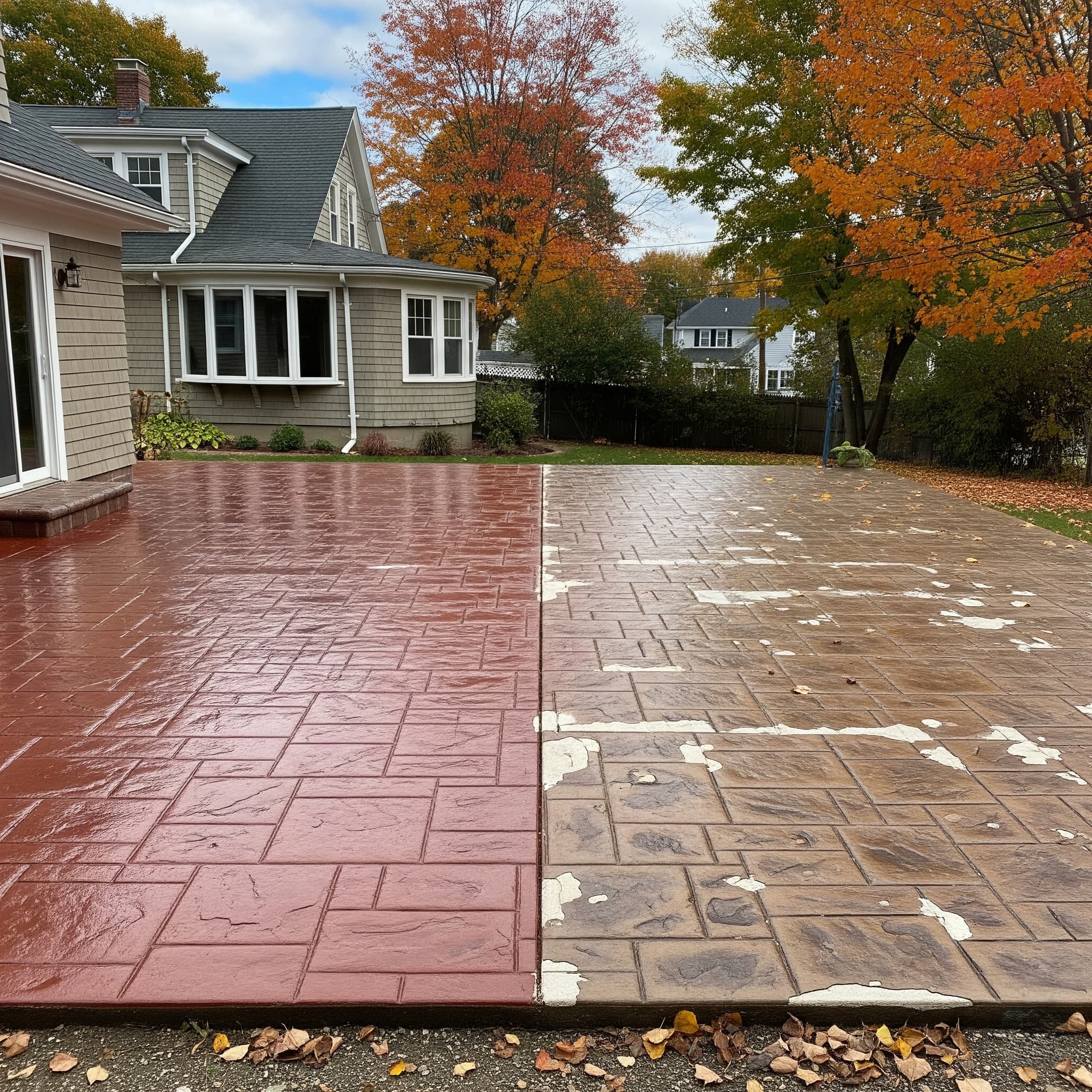
Stamped Concrete Mistakes to Avoid in Wet/New England Climates
September 22, 2025
No Comments