
Menu
Concrete Flooring for Boston Garages & Workshops
Concrete Flooring Boston
Boston homeowners are gradually recognizing that concrete flooring is a great way to create a functional garage or workshop area. Whether you live in a North End Row house or a suburban development in Newton, installing the right flooring in your garage will take an otherwise practical space and turn it into a functional home extension. Knowing what options are available to you, how much they cost, and what installation considerations you need to think about will help you make educated decisions when looking to renovate your garage. Contractors who have experience working in this industry can inspect your current condition, offer you some recommendations on the best solution for your project, and ensure that your new installation meets all of Boston’s extreme weather requirements.
Concrete Flooring Options for Boston Garages
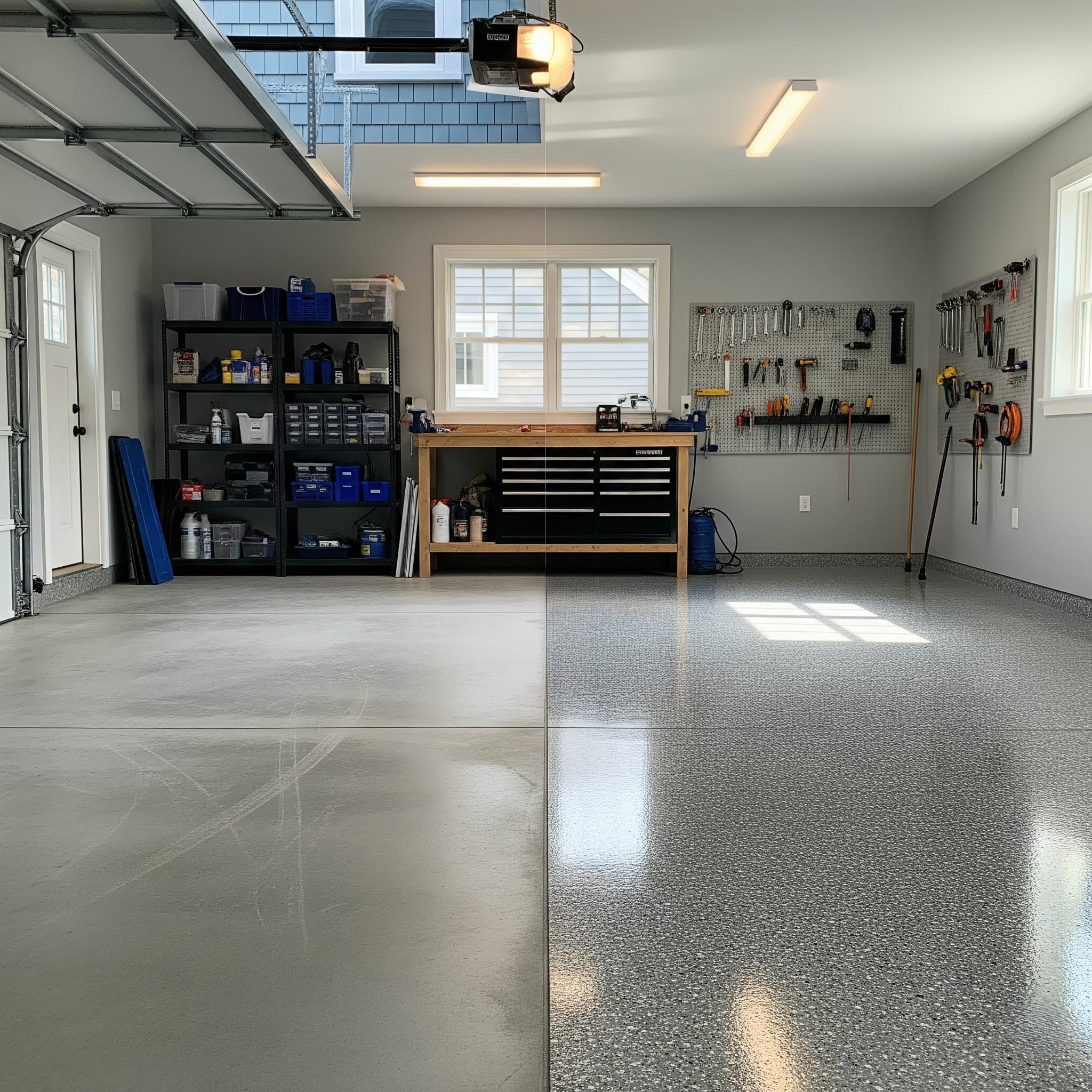
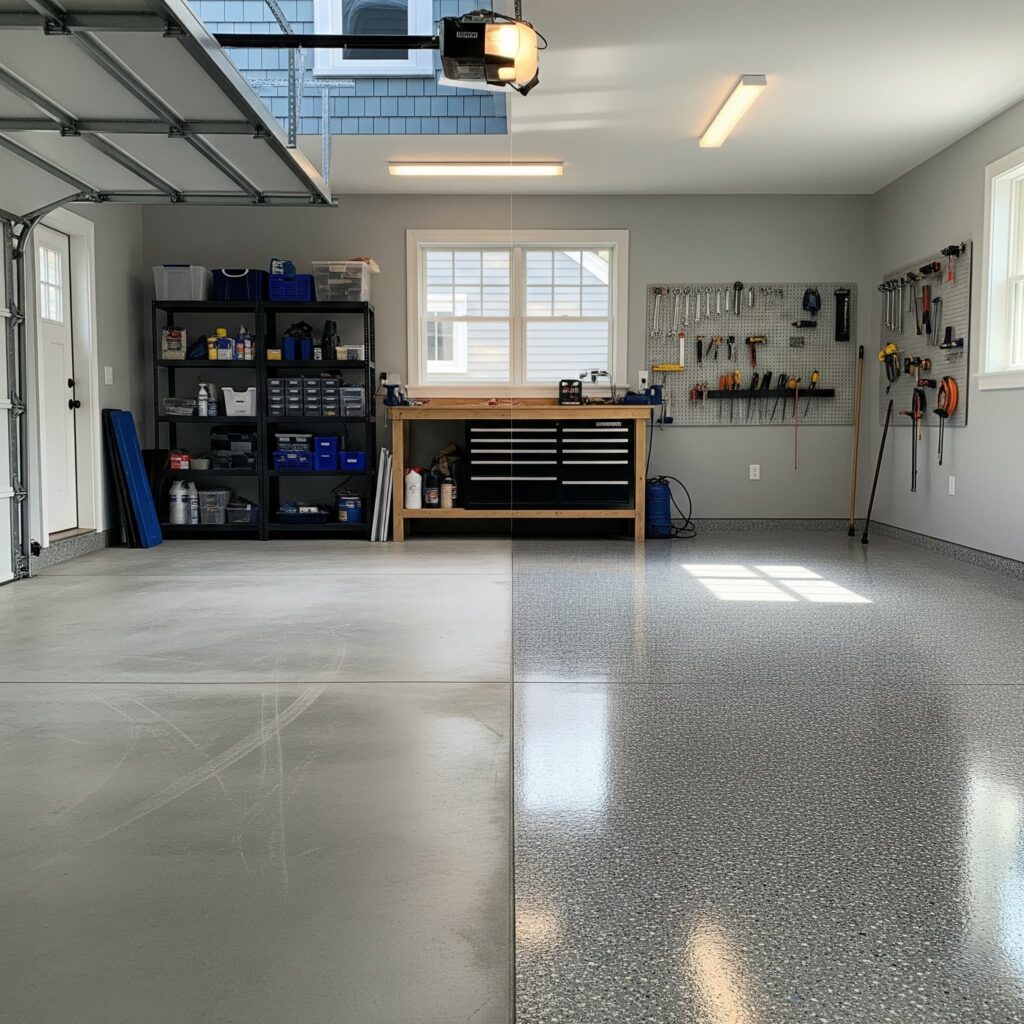
The majority of garage flooring systems in Greater Boston rely on basic concrete slabs. The average cost of installing supported concrete ranges from $8 to $15 per square foot, depending on the required support and thickness of the installation. Raw concrete can be damaged by vehicle traffic, chemical spills, and harsh winters; therefore, protective covers are necessary for the top areas of the concrete.
More and more homeowners are upgrading their residential garage and workshop floors with polished concrete. Depending on the design and number of final touches (the polish), professional polishing services range in price from $3 to $8 per square foot for basic designs to $5 to $15 per square foot for more detailed designs. Compared to untreated concrete, polished concrete has many benefits, such as resisting staining and being easier to clean and maintain.
Epoxy Floor Coating Systems
Professional epoxy floor coating system installations in Boston garages will generally cost between $6 to $10 per square foot for surface preparation and applying multiple coating layers. Therefore, the cost to complete an epoxy treatment for a standard two-car garage will be approximately $3,000 to $5,000.
Decorative Flake Systems
While decorative flake systems provide added slip resistance and visual appeal in workshop environments, they are more expensive than standard epoxy. The cost of a multi-layer decorative flake system installation is generally between $7 to $12 per square foot. Decorative flake systems have been known to be very durable and resistant to impacts and chemical exposure. Premium metallic epoxy finishes can create visually appealing effects; however, they can be expensive, with premium installations costing between $10 to $14 per square foot.
Workshop-Specific Flooring Solutions
Because workshops often require specialized flooring solutions to withstand heavy equipment, tool drops, and chemical spills, industrial-grade epoxy systems are recommended for workshops located in areas such as Suffolk County. Epoxy systems are extremely durable and resistant to abrasion, impacts, and harsh cleaning chemicals.
For the most demanding workshop applications, polyurea coatings are the best option available today. While installation costs for polyurea coatings are generally more than traditional epoxy systems ($8 to $15 per square foot), they are much more flexible and cure faster. In addition to being able to withstand extreme temperature fluctuations, which are common in unheated Boston garages, polyurea coatings are ideal for workshops where heavy equipment is used regularly.
Load-Bearing Requirements
Garages housing heavy machinery require strengthened concrete slabs to support focused loads. Residential garage slabs are generally 4 to 6 inches thick, whereas workshop applications may require slabs to be 6 to 8 inches thick to support the weight of machinery. Improper strengthening (such as using steel rods or wire mesh) will compromise the structural integrity of the concrete slab under severe conditions.
Floor Drains
In workshops utilizing water-covered processes, chemicals, etc., floor drains become essential. The cost to install a floor drain is approximately $300 to $800 per drain, which includes excavation and plumbing connections. Professional contractors coordinate with local plumbing companies and ensure proper slope to allow for effective drainage throughout the workspace.
Climate Considerations for New England
Boston’s harsh winter climate presents unique challenges for garage and workshop flooring systems. Freeze-thaw cycles stress the top areas of concrete, while road salt and de-icing chemicals accelerate deterioration. Proper sealing and protective coatings prevent wetness intrusion and chemical damage during the challenging winter months.
Heated Expansion Joints
For large concrete slabs subjected to seasonal movement due to temperature extremes, heated expansion joints provide space for movement. Professional installation includes appropriate joint spacing and sealing to prevent cracking under temperature extremes. In addition, warm garage systems require specialized concrete mix design and installation techniques to accommodate radiant heating elements.
Moisture Management Systems
For below-garage workspaces and basements, vapor barriers prevent moisture migration through concrete slabs. Installation costs add between $1 to $3 per square foot but prevent expensive moisture-related problems. In addition, proper drainage around the foundation of the garage protects against water infiltration near areas such as Back Bay and Cambridge.
Dehumidification Systems
To maintain optimal moisture levels within enclosed workshop spaces, dehumidification systems are recommended. Professional HVAC contractors recommend appropriate systems based on space size and usage patterns. Controlled humidity levels protect tools, equipment, and stored materials from corrosion and deterioration.
Permits Required for Significant Garage Modifications
Boston’s Inspectional Services Department requires permits for significant garage modifications that involve structural changes and utility connections. Building permits cost $50 plus $10 per $1,000 of project value, and electrical and plumbing permits require separate applications. Therefore, comprehensive workshop conversions may require multiple permits and inspections.
Fire Safety Codes
Fire safety codes dictate specific requirements for workshop installations, including ventilation, electrical systems, and hazardous-material storage. Professional contractors ensure compliance with Massachusetts building codes and local fire department regulations. In addition, some neighborhoods have HOA restrictions affecting garage modifications and external appearances.
Cost Analysis and Budgeting Factors
Average costs for installing basic concrete slabs for typical Boston garage projects, including excavation forms and finishing, average $2,136 to $2,337. Site conditions can greatly impact final costs for these types of projects, especially if poor soil conditions exist or if access to the site is difficult. Removing existing slabs before new concrete installation adds $1.60 to $2.50 per square foot to the total cost of replacement projects.
High-quality flooring systems, such as premium epoxy coatings, may have higher initial costs, but they provide longer-term durability and lower long-term maintenance costs. High-quality epoxy coatings have a life expectancy of 10 to 15 years with proper care, whereas basic concrete typically requires refinishing every three to five years. The long-term value analysis often indicates that investing in a premium coating system is worthwhile, even though the upfront costs are greater.
DIY vs. Professional Installation
DIY epoxy kits can be purchased at relatively low cost, between $2 to $5 per square foot, but they require a great deal of surface preparation and precise application techniques to achieve the desired finish. Professional contractors utilize specialized equipment, including diamond grinding machines, to create proper surface profiles for epoxy adhesion. They also perform thorough evaluations of the concrete surface to identify potential issues that could cause costly installation failures or premature coating failure.
Surface Preparation
Surface preparation is the most important step in achieving a successful flooring installation. Professional contractors take the time to properly prepare each substrate before applying the selected flooring solution.
Seasonal Maintenance
Seasonal maintenance involves cleaning salt residue off the floors after winter and inspecting the floors for cracks during spring inspections. Professional contractors offer annual maintenance programs to ensure that the floors continue to function optimally throughout Boston’s severe climate conditions. Proper ventilation and climate control also help protect flooring investments from moisture-related deterioration.
Choosing the Right Flooring Solution
Determining the appropriate flooring specifications depends upon the type of activities that will occur within the garage or workshop. For example, light-duty storage areas do not require the same type of protection as heavy-duty workshops. Professional evaluators consider current needs, plans, and budgetary constraints when recommending the right flooring solutions for the customer.
Appearance Preferences
Appearance preferences are becoming a major factor in choosing the right flooring solution as garages are increasingly being transformed into multi-purpose rooms. Decorative options such as custom colors, logos, and patterns allow customers to express their personality while still meeting functional requirements. Modern garage flooring blends performance requirements with visual appeal to enhance property values.
Boston Concrete Works provides comprehensive evaluations and installations for garage and workshop flooring projects throughout the Greater Boston area. The experienced staff understand local conditions, code requirements, and quality materials that provide long-lasting performance in New England’s severe climate conditions.
LATEST POSTS
Cost & ROI of Decorative Concrete Upgrades for Boston Homes
September 24, 2025
No Comments
Stamped Concrete Mistakes to Avoid in Wet/New England Climates
September 22, 2025
No Comments