
Menu
What Questions Should I Ask Local Concrete Contractors in Boston
Concrete Contractor Boston
Finding the best concrete contractor in Boston will require some time and research, and you’ll want to be prepared with all the right questions when calling a contractor to meet at your house. Many people do a concrete contractor near me search, but they often make an impulsive decision to hire a contractor before thoroughly reviewing that contractor’s credentials, resulting in poor quality or overpriced work. Concrete work is an expensive part of building or repairing a property, so it should last for years if done correctly. A contractor that can get the job done should have demonstrated expertise and reliability, as well as transparency throughout the process. The key to this is knowing what to ask ahead of time; you will find the best fit for your project and budget.

Basic Questions About Massachusetts Contractor Licenses and Insurance
Many people overlook the simple aspects of choosing contractors in Massachusetts. In fact, it is very important to verify that a contractor has a current Massachusetts state license before hiring him/her. Any contractor hired for work in Boston needs to obtain local permits for said work as well. Verify immediately that a contractor has liability insurance to cover the risk of injury to themselves/employees while performing the job.
Additionally, it is recommended to verify that the contractor has workers’ compensation insurance coverage for employees injured on the job. Both forms of coverage protect individuals and the property owner from risks associated with accidents occurring on the job site (injuries) and property damage risks associated with construction/building projects. A license is required for all contractors so that they may be aware of the Massachusetts State Building Code; as a result, only licensed contractors can comply with the building codes of Boston. The building code outlines the specifics of how to install concrete around homes. As a result, a licensed contractor is essential in ensuring compliance with the building codes of Boston and protecting the homeowner from improper installation of the concrete.
Boston Permit Requirements for Concrete Work
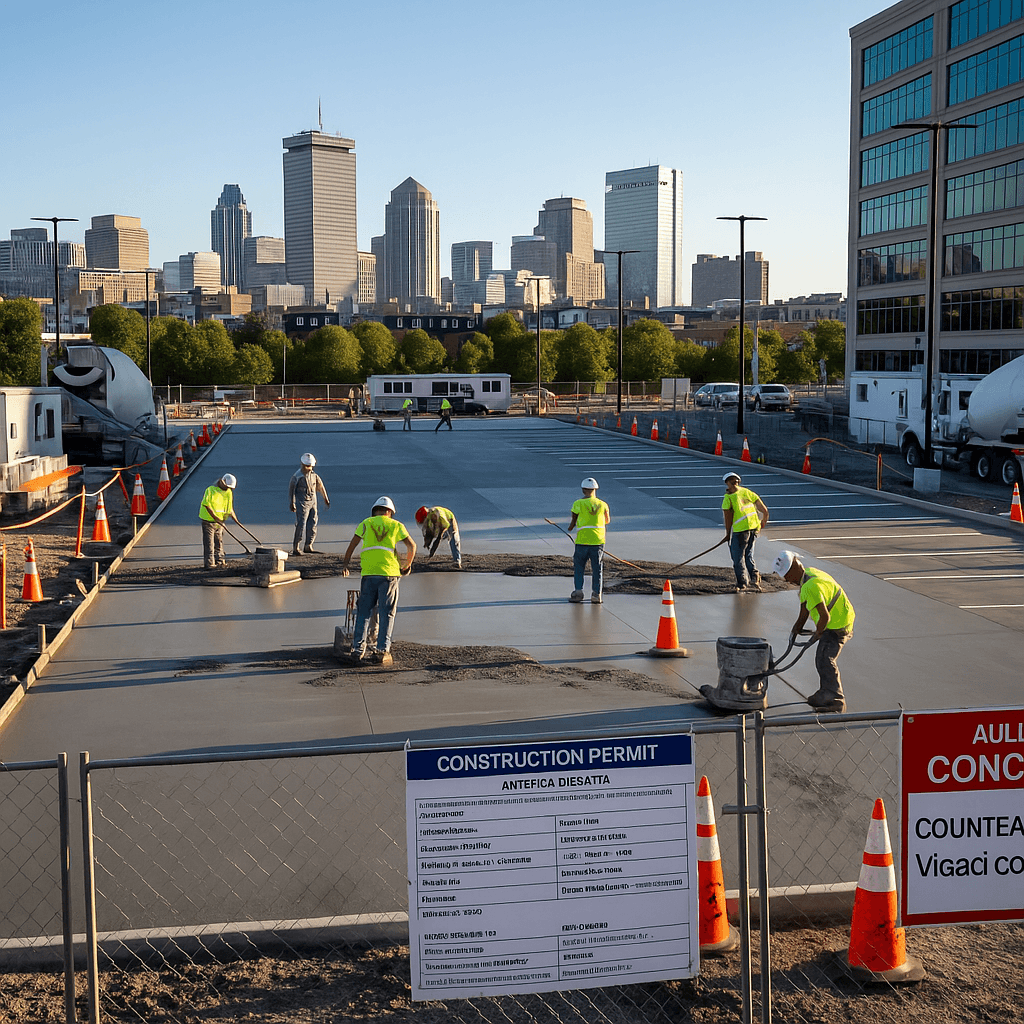
Boston requires permits for almost all concrete work exceeding certain minimums, specifically for concrete driveways, patios, and structural foundations. Contractors that have been doing this type of work for some time should be able to handle the application process for the necessary permits and understand the process for inspections provided by the City of Boston. Contractors who have extensive experience with the permitting process and have an understanding of Boston’s zoning regulations, which dictate where and how far from property lines concrete can be placed/install, will also be beneficial to hire.
Review of Residential Job Experience and Portfolios
When researching and interviewing potential contractors, it is common to request references for their recent residential jobs performed in locations similar to Back Bay, Cambridge, Beacon Hill, etc. Many professional contractors will also have a portfolio showing examples of various types of concrete work performed. Examples may include decorative stamped patios, concrete driveways, and walkways that perform the function intended, and other examples of decorative work, such as exposed aggregate finishes and colored/tinted concrete surfaces. It would also be helpful to review their background experience working within Boston’s environment, which includes working through freeze-thaw cycles and cracking, as well as working within designated historic districts and navigating the presence of underground utility systems.
Concrete Mixes and Decorative Options
Studies indicate that it is valuable to ask potential contractors about concrete mixtures that have been developed to address the harsh weather conditions experienced in New England. Professionals should be knowledgeable about available decorative options and finishes, including but not limited to exposed aggregate finishes, colored or tinted surfaces, etc. Studies also indicate that professionals will describe material selection and the techniques used to account for the site’s drainage features and soil conditions. Studies also emphasize the importance of proper curing techniques, especially in Boston’s variable weather conditions.
Timelines and Scheduling
Because of Boston’s weather, it is wise to develop project timelines that recognize the limitations imposed upon construction by the changing seasons. Construction in Boston does not occur smoothly year-round. You should inquire with the potential contractor about the number of crew members they plan to send to the job site. You should also request a detailed explanation of their scheduling approach. Finally, you should also request their procedure for handling weather-related delays, such as delays caused by inclement weather during the critical concrete pour stages. With a good understanding of the sequence of steps involved in the project, developing a realistic timeline will be much easier, and expectations for completing the entire project will remain reasonable.
Site Preparation/Cleanup
A reputable contractor will provide detailed descriptions of the excavation requirements, preparation of the subgrade/base, and restoration of the site after project completion. These include the responsible disposal of removed materials and the protection of adjacent landscaping and/or green spaces found in areas such as the Common or Public Garden.
Estimates and Payment Terms
You should request a written estimate detailing the cost of materials, labor, and any additional charges for permits or site preparation. Be cautious of contractors requesting a significant amount of money at the beginning of the project or those who provide little or no detail in their verbal estimates. Most reputable contractors require little to no down payment and base their payment terms on the progression of the project.
Warranty and Maintenance Guidelines
Ask if the contractor offers a warranty covering materials and craftsmanship, especially concerning crack resistance and durability of the concrete surface. Most experienced contractors will provide maintenance guidelines to help extend the life of the concrete and clarify what is included/excluded under the warranty.
Communication and Conflict Resolution
As you research and interview potential contractors, assess the manner in which they communicate with you during the initial consultation. Assess their response to your inquiries/concerns. Studies have shown that effective communication reduces the likelihood of miscommunication. Therefore, it is a benefit to establish open communication early in the project. In addition to assessing the method of communication, it is suggested that you ask the contractor how they handle unforeseen problems that arise during the project. Change orders that arise mid-project are another area of interest. Studies indicate that conflict resolution procedures differ greatly depending on the firm.
Client References/Past Client Feedback
Request the contact information for recent clients who have had similar residential concrete projects completed in areas such as Charlestown or the South End. The past client can provide candid insight into their experience with the contractor.
Safety Standards/Protocols
Professional contractors understand the importance of maintaining a safe work environment by having adequate training, using proper equipment, and maintaining control of the work site. You should ask the contractor about their safety record, their insurance coverage, and how they will protect both their employees and you/the homeowner, during the construction activity on your property.
Environmental Considerations
Most responsible contractors have knowledge of the environmental regulations and stormwater management requirements of Boston. They should be able to tell you how their work adheres to the city’s drainage policy and how they will protect the existing vegetative growth and soil conditions.
Quality Control and Testing Procedure
All contractors should implement quality control measures throughout each stage of their projects, from the selection of materials through the final inspection of the finished product. You should ask the contractor about their testing procedures, quality standards, and how they ensure the work is compliant with the local building codes and accepted trade practices.
Durability and Long-Term Performance
The goal of a quality concrete project should be to last through Boston’s harsh winter months and extreme temperature fluctuations without significant degradation of the concrete surface. Professional contractors should be able to explain how the techniques and materials selected for the project contribute to long-term performance and reduce the frequency of maintenance needed on the project.
Familiarity with Boston and Local Conditions
Contractors familiar with Boston’s specific conditions, including its unique soil composition, drainage characteristics, and neighborhood-specific requirements, will better understand how to complete a residential concrete project in your neighborhood. You should ask the contractor about their previous experience working in designated historic areas, such as the North End, or new development areas throughout the larger Boston Metropolitan Area.
By conducting a thorough inquiry into a contractor’s experience and knowledge of the community, you can be confident that you are hiring a contractor who understands the complexities of a Boston-based residential concrete project. At Boston Concrete Works, we believe in communicating clearly and thoroughly with our customers regarding each residential concrete project, enabling homeowners to make informed decisions for their properties.
LATEST POSTS
Cost & ROI of Decorative Concrete Upgrades for Boston Homes
September 24, 2025
No Comments
Stamped Concrete Mistakes to Avoid in Wet/New England Climates
September 22, 2025
No Comments